
Calendar
 Join us for an exploration into alternative process printing with Anton Orlov.
Film and other analogue photography has been a passion of Anton’s since he was a kid and for the past few years he has been completely engulfed in making tintypes and ambrotypes using wet plate collodion technique. The thrill of uncertainty, the challenges of timing, incredible resolution and permanency – all of these factors have made wet plate images entirely irresistible to him.
Wet plate collodion is a technique invented in 1849 by Frederick Scott Archer and was most widely used from 1851 to mid 1880s when commercially made dry plates were introduced.
A plate of aluminum, in the case of modern tintypes, or glass, as in ambrotypes, is coated with collodion, which contain salts of bromide and iodine suspended in ether and alcohol. The entire image-making operation that follows must be done before that plate dries, hence the name ‘wet plate’.
A coated plate is dipped in silver nitrate for 1.5-3 minutes where it becomes sensitive to light. After that, in the darkroom or location dark box, it is placed in a holder, brought to the camera for exposure. Afterwards it is brought back into the dark and under red light it is developed by inspection and washed. The last steps are fixing and final wash. Resulting images are made up of particles of silver, so after the plate is dry it must be varnished to protect it from oxidation, but that can be done a while later.
Collodion generally has a maximum ISO of 1, maybe 2 if you’re lucky, and usually it’s a lot slower – more like ISO 0.25 or even 0.125. Therefore exposures generally range from few to a few dozen seconds. One thing to keep in mind as well is that collodion emulsion is blue-sensitive, so blue hues always turn out a lot brighter than they may seem in real life and yellows and reds if exposed normally are close to black in the final image. Another thing to consider is that ether and alcohol evaporate very rapidly, so depending on outside condition such as temperature and humidity you may have only a few minutes in which to make the image and process it, so a darkroom must be present within steps of the scene you wish to capture. On a damp cool day though the plate may stay wet for up to 20-30 minutes.
After a while of making tintypes Anton got a bit curious of how far he could push the medium and he wondered if it would be possible to freeze action under natural lighting conditions:
I was aware of work having been produced in a controlled environment and with the use of very powerful strobes to freeze skateboarders in mid-flight, but to me that wasn’t ‘true action’ – after all, if you tell someone where and when to jump and then employ artificial lighting that is designed to freeze anything moving that does not really scream ‘action sports’ to me. Having lived in San Diego since the 90s and having at one point been very involved in surfing I decided to try to capture some surfers riding waves.
I was lucky enough to find a good deal on a 7in Kodak Aero Ektar lens that has maximum aperture of f2.5. Then I did some calculations. I figured out that if I keep my collodion at around ISO 1 by mixing it and refrigerating it then with a fast lens and in direct sunlight I should be able to get my shutter speeds down to about 1.60th or maybe even faster. Regularly that’s not really fast enough to truly freeze action, but I would worry about that later. I outfitted my lens with a roller-blind shutter made by Tommy of Japan somewhere around mid-20th century. The beauty of this system is that the shutter speeds allowed by those devices are within perfect range – 1/15th to 1/90th and they are adjustable continuously. So that’s the setup I brought out along with my dark box.
 Join us for our Monthly Critique Night. Members bring in prints for critique. Those prints accepted by the Judge will hang for up to 2 months in our member gallery.
Our judge for June is Travel Photography Author and San Diego County Fair Jurist, Andrew Hudson.
To become a member and submit your images for critique. Visit our Membership page
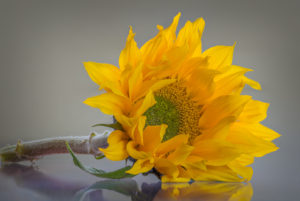
Join us for our Quarterly Image Competition.
The Quarterly Image Competition is a special event for Darkroomers. Guests can come and vote on images but only members can submit images. The competition is theme based and the theme is identified at the beginning of the quarter. The meetings are a social event with Hors d’oeuvres and drinks being served. Members and guests can walk around and take in the images and vote on the ones they like.
The theme for this quarter is “Macro”

Join us for our Monthly Critique Night. Members bring in prints for critique. Those prints accepted by the Judge will hang for up to 2 months in our member gallery.
Judges Vary Monthly.
To become a member and submit your images for critique. Visit our Membership page
Our Judge for July is Sally Reis Vogt